
Introduction
The cryptocurrency industry is evolving rapidly as blockchain technology becomes an important part of digital finance, business operations, and online transactions. With millions of transactions taking blockchain analytics place across blockchain networks, understanding how digital assets move has become increasingly valuable. Blockchain analytics is helping businesses, investors, developers, and compliance professionals turn complex transaction records into meaningful information.
Blockchain analytics involves collecting, examining, and interpreting data recorded on blockchain networks. It allows users to study transaction patterns, monitor digital asset movements, identify potential risks, and understand market behavior. As the cryptocurrency ecosystem expands, new analytical methods and technologies are changing how organizations interact with digital assets.
Several important trends are shaping the future of blockchain analytics, including artificial intelligence, cross-chain monitoring, real-time transaction analysis, decentralized finance tracking, and improved regulatory compliance. These developments are making blockchain data more accessible and useful throughout the cryptocurrency industry.
1. Artificial Intelligence and Machine Learning in Blockchain Analytics
Artificial intelligence and machine learning are becoming increasingly important in blockchain analytics. These technologies can process large volumes of transaction data, recognize unusual patterns, and identify relationships that might be difficult to discover through manual analysis.
Traditional analytical methods often depend on predefined rules and historical reports. AI-powered systems can examine broader datasets and adjust their models as new information becomes available. This capability helps analysts investigate suspicious transactions, recognize changing market conditions, and detect unusual activity more efficiently.
For example, machine learning models can identify transaction patterns that differ from normal behavior. Investigators can then review these patterns to determine whether they indicate fraud, operational errors, or legitimate activity.
AI can also support market research by analyzing transaction volumes, wallet activity, and changes in liquidity. However, analytical predictions are not always accurate. Reliable results still require quality data, appropriate model design, and human oversight.
2. Real-Time Blockchain Monitoring
Real-time monitoring is another major trend shaping the cryptocurrency industry. Rather than waiting for periodic reports, organizations increasingly want immediate insights into blockchain transactions and network activity.
Real-time blockchain analytics can help exchanges monitor deposits and withdrawals, businesses track digital payments, and security teams investigate unusual movements of funds. Timely alerts allow organizations to respond more quickly when a transaction requires further review.
This approach is particularly valuable in an environment where cryptocurrency markets operate continuously. Significant transactions, sudden liquidity changes, and unexpected network activity can occur at any time.
Real-time monitoring also supports operational efficiency. Companies can automate notifications, establish transaction thresholds, and prioritize cases that require human attention. Nevertheless, effective systems must balance speed with accuracy to avoid overwhelming teams with false alerts.
As blockchain infrastructure improves, real-time analytics is likely to become a standard component of digital asset management.
3. Cross-Chain Analytics and Interoperability
The cryptocurrency ecosystem includes numerous blockchain networks, each with its own structure, applications, and transaction mechanisms. As users move digital assets between networks, analyzing activity across multiple blockchains has become increasingly important.
Cross-chain analytics brings information from different networks into a more unified analytical environment. It helps researchers understand how assets move between ecosystems and how activity on one blockchain may relate to activity on another.
This capability is especially relevant as decentralized applications and cross-chain bridges connect previously separate networks. Without cross-chain visibility, analysts may have an incomplete understanding of transaction activity.
For example, an organization monitoring digital asset exposure may need to examine activity across several blockchain networks rather than focusing on a single chain. Cross-chain tools can help provide a broader picture of asset movements and potential risks.
However, linking transactions across networks can be technically challenging. Different transaction formats, privacy features, bridge mechanisms, and incomplete data can limit the reliability of conclusions. Continued improvements in interoperability and data standardization will help address these challenges.
4. Growth of Decentralized Finance Analytics
Decentralized finance, commonly known as DeFi, has introduced new ways for people to exchange assets, provide liquidity, borrow funds, and participate in financial applications without relying entirely on traditional intermediaries.
These activities generate complex blockchain data that requires specialized analytical tools. DeFi analytics helps users understand liquidity pools, lending activity, transaction costs, smart contract interactions, and changes in protocol participation.
Investors and researchers can use these insights to evaluate how decentralized applications operate and how their activity changes over time. Developers can also examine protocol performance and identify areas where improvements may be necessary.
Risk assessment is another important application. Blockchain analytics can help identify unusual liquidity movements, concentrated asset exposure, and transaction patterns associated with potential vulnerabilities.
Nevertheless, blockchain data alone cannot guarantee that a DeFi protocol is secure or sustainable. Smart contract audits, governance reviews, market analysis, and an understanding of underlying risks remain essential.
As decentralized financial services develop, specialized DeFi analytics will play a growing role in transparency and informed decision-making.
5. Stronger Cryptocurrency Compliance and Risk Management
Regulatory compliance is becoming a central consideration for cryptocurrency exchanges, payment providers, and other digital asset businesses. Organizations must increasingly understand where funds originate, how transactions move, and whether certain activities require additional investigation.
Blockchain analytics can support transaction monitoring, sanctions screening, and investigations into potentially suspicious activity. By examining transaction histories and relationships between blockchain addresses, compliance teams can identify cases that deserve further review.
These tools can also help organizations maintain records, improve reporting processes, and apply risk-based monitoring procedures.
An important limitation is that blockchain addresses do not automatically reveal the real-world identities of their owners. Address attribution depends on available evidence, reliable data sources, and appropriate verification procedures.
Responsible compliance practices therefore combine analytical tools with human investigation and established legal procedures. Organizations must also consider privacy obligations and avoid treating uncertain analytical matches as conclusive proof of wrongdoing.
As regulations and industry standards continue to develop, compliance-focused blockchain analytics will remain an important area of investment.
6. Privacy-Preserving Analytics
Privacy is another major trend influencing blockchain data analysis. Although many public blockchain transactions can be examined openly, users and organizations may not want every financial relationship or transaction detail to become easily identifiable.
Privacy-preserving technologies aim to make useful analysis possible while reducing unnecessary exposure of sensitive information. Depending on the application, these approaches may include cryptographic techniques, selective disclosure, secure data processing, and privacy-enhancing computation.
For businesses, privacy-preserving analytics can help support internal monitoring and collaboration without revealing more information than necessary. Researchers may also benefit from methods that allow certain properties of data to be verified without exposing all underlying details.
The challenge is balancing privacy with accountability. Excessive transparency can create risks for legitimate users, while insufficient visibility may complicate compliance and investigations.
Future blockchain analytics systems will need to address both concerns through carefully designed technical controls and clear data governance policies.
7. Better Visualization and User-Friendly Analytical Platforms
Blockchain information can be difficult to interpret because transaction records are extensive and interconnected. Data visualization is helping make this information easier to understand.
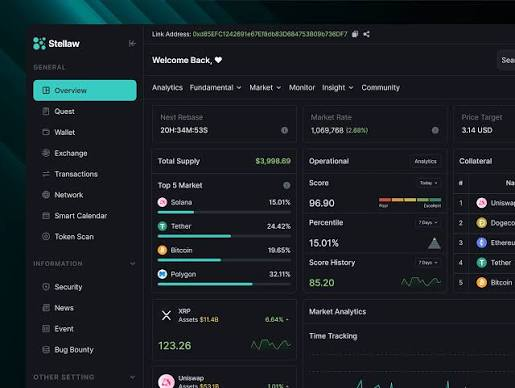
Modern analytical platforms can present transaction histories, address relationships, asset movements, and network activity through interactive dashboards and visual graphs. These features help users identify patterns without manually reviewing large amounts of raw blockchain data.
User-friendly interfaces are also expanding access to blockchain analytics. Businesses that lack large technical teams can use dashboards and automated reports to monitor relevant metrics.
For example, a company may track transaction volumes, network fees, wallet activity, or payment processing trends through a centralized interface. Researchers can compare historical activity and explore changes across different periods.
Clear visualizations do not automatically make conclusions accurate. Platforms must explain their data sources, distinguish confirmed information from estimates, and communicate uncertainty appropriately.
8. Predictive Analytics and Market Intelligence
Predictive analytics is gaining attention as cryptocurrency participants seek to understand possible future market developments. By combining historical transaction records with current network activity, analytical systems can help identify trends and generate scenarios.
Relevant indicators may include active addresses, transaction volume, exchange-related movements, network fees, and changes in asset distribution. Analysts can compare these measurements with market prices and other economic information to investigate possible relationships.
Businesses may use these insights to plan operations, while researchers can study shifts in network participation and investor behavior.
However, blockchain activity is only one part of the cryptocurrency market. Prices are also influenced by economic conditions, regulations, liquidity, investor sentiment, and unexpected events. Large transactions do not necessarily predict future price movements, and historical relationships may not continue.
Predictive analytics is therefore most useful as a research and decision-support tool rather than a guarantee of investment outcomes.
9. Improved Data Quality and Standardization
As blockchain analytics becomes more sophisticated, data quality is emerging as a critical concern. Different networks use different technical structures, and analytical platforms may interpret transactions or classify addresses in different ways.
Inconsistent labeling, incomplete records, and unreliable attribution can produce misleading results. These problems become more significant when organizations combine information from multiple networks or third-party providers.
Improved data standardization can make analytical results easier to compare and verify. Consistent definitions, transparent methodologies, reliable timestamps, and clear documentation help organizations understand what their metrics actually represent.
Data provenance is also important. Analysts should be able to determine where information originated, how it was processed, and which assumptions influenced the final results.
As adoption grows, stronger data governance will help make blockchain analytics more reliable for businesses, researchers, and compliance professionals.
Conclusion
Blockchain analytics is becoming an essential part of the cryptocurrency industry’s development. Artificial intelligence, real-time monitoring, cross-chain analysis, DeFi research, privacy-preserving technologies, and predictive intelligence are expanding how blockchain data can be used.
These trends are helping organizations improve transparency, investigate risks, understand market activity, and make more informed operational decisions. At the same time, challenges involving privacy, data quality, regulatory expectations, and analytical accuracy remain important.
The future of blockchain analytics will depend on combining advanced technology with responsible data practices and careful interpretation. As blockchain networks and digital asset applications continue to evolve, organizations that understand these analytical trends will be better prepared to navigate an increasingly complex cryptocurrency landscape.