
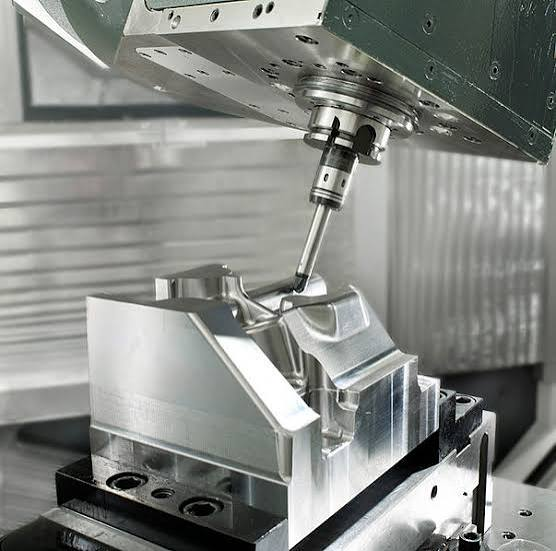
Introduction to CNC Milling 5 Axis
CNC milling 5 axis is an advanced manufacturing process that uses computer numerical control (CNC) technology to create complex and precise components from different materials. Unlike traditional Cnc Milling 5 Axis milling machines, which typically operate along three linear axes, a five-axis CNC milling machine can move a cutting tool or workpiece along five different axes. This additional movement allows manufacturers to produce intricate shapes, curved surfaces, and detailed components with exceptional accuracy.
Five-axis CNC milling is widely used in industries such as aerospace, automotive, medical equipment, electronics, and industrial machinery. As manufacturing requirements continue to evolve, businesses increasingly rely on this technology to improve production efficiency, reduce machining time, and maintain consistent product quality.
Understanding how five-axis milling works, its advantages, and its applications can help businesses select the right manufacturing solution for their projects.
What Is CNC Milling 5 Axis?
CNC milling 5 axis is a machining process that uses a computer-controlled milling machine capable of moving along three linear axes and two rotational axes. The linear axes are commonly identified as X, Y, and Z, while the rotational axes are generally called A and B or A and C, depending on the machine configuration.
The X, Y, and Z axes control movement across three-dimensional space. The additional rotational axes allow the cutting tool or workpiece to tilt and rotate, providing access to multiple sides and angled surfaces.
This flexibility makes five-axis machining suitable for producing parts that would be difficult or time-consuming to manufacture using conventional equipment.
For example, an aerospace component may require curved surfaces, angled holes, and complex geometries. A five-axis CNC milling machine can often manufacture these features in fewer setups, improving accuracy and reducing handling requirements.
How Does Five-Axis CNC Milling Work?
The five-axis milling process begins with a digital design created using computer-aided design (CAD) software. Engineers then use computer-aided manufacturing (CAM) software to convert the design into machining instructions.
These instructions control the machine’s movements, cutting speed, tool paths, and other machining parameters.
The typical process includes the following stages.
1. CAD Model Development
The first step involves creating a detailed three-dimensional model of the required component. The model defines the part’s dimensions, surfaces, holes, curves, and other features.
A precise CAD model helps manufacturers understand the component’s geometry before production begins.
2. CAM Programming
After completing the design, programmers use CAM software to generate tool paths. These paths determine how the cutting tool moves around the material to create the desired shape.
Proper programming helps prevent tool collisions, reduce unnecessary movements, and maintain the required surface quality.
3. Material Preparation
Manufacturers secure the raw material inside the machine using suitable fixtures or workholding equipment. Common materials include aluminum, stainless steel, titanium, brass, and engineering plastics.
Selecting the appropriate material and securing it correctly are essential for achieving consistent machining results.
4. Automated Machining
Once the machine is configured, the CNC controller follows the programmed instructions. The cutting tool removes material while the machine coordinates movement across its five axes.
Depending on the machine design, the cutting tool, the workpiece, or both may move rotationally.
5. Inspection and Finishing
After machining, the finished component is inspected to verify its dimensions, tolerances, and surface quality. Additional finishing processes may be required depending on the application.
Key Advantages of CNC Milling 5 Axis
Five-axis machining provides several important advantages for manufacturers seeking greater precision and productivity.
Improved Accuracy and Repeatability
One of the primary benefits of CNC milling 5 axis is the ability to machine complex components with fewer repositioning steps. Each time a workpiece is removed and reinstalled, small alignment errors can occur.
Reducing the number of setups helps minimize these errors and improves dimensional consistency. Computer-controlled movements also support repeatable production when the machine, tooling, and programming are properly configured.
Greater Design Flexibility
Five-axis machines can reach surfaces and angles that are difficult to access using three-axis equipment. This capability supports the production of intricate shapes, curved components, deep cavities, and complex industrial parts.
Designers can therefore develop components that meet demanding functional and structural requirements.
Reduced Production Time
Traditional machining may require multiple setups to reach different sides of a component. Five-axis milling can often complete several operations in a single setup.
This reduces handling time and may shorten the overall production cycle. Simultaneous movement along multiple axes can also help optimize tool paths and improve machining efficiency.
Better Surface Finish
Five-axis machining allows the cutting tool to approach a surface at an appropriate angle. This can improve tool engagement, reduce unwanted vibration in suitable conditions, and produce smoother finishes.
The final result depends on factors such as cutting parameters, machine rigidity, tool selection, and material properties.
Reduced Need for Special Fixtures
Because a five-axis machine can approach multiple surfaces from different directions, some components require fewer custom fixtures or repositioning operations.
This can simplify production planning and reduce setup expenses, particularly for complex components and low-volume manufacturing projects.
Common Applications of Five-Axis CNC Milling
Five-axis CNC milling is used in several industries where precision, repeatability, and complex geometry are essential.
Aerospace Manufacturing
The aerospace industry uses five-axis machining to produce turbine components, engine parts, structural brackets, and specialized housings. These components often require lightweight designs, complex contours, and strict dimensional requirements.
Materials such as titanium and high-strength aluminum alloys are frequently machined for aerospace applications.
Automotive Industry
Automotive manufacturers use five-axis CNC milling to produce engine components, transmission parts, custom prototypes, molds, and performance vehicle components.
The technology supports the development of complex parts while helping manufacturers maintain consistent production quality.
Medical Equipment
Medical manufacturing often requires intricate components with accurate dimensions and smooth surfaces. Five-axis milling can be used to manufacture surgical instruments, orthopedic components, medical device housings, and specialized equipment parts.
Material selection and finishing requirements depend on the specific medical application.
Industrial Machinery
Industrial equipment frequently contains complex housings, impellers, precision shafts, and specialized mechanical components. Five-axis machining can simplify the production of parts that require multiple angled surfaces or carefully coordinated features.
Mold and Die Production
Mold manufacturers use five-axis milling to create complex cavities, curved surfaces, and detailed contours for plastic injection molding and other forming processes.
Improved tool access can reduce the need for multiple machining stages and help achieve the required surface finish.
Five-Axis CNC Milling vs. Three-Axis Milling
Three-axis and five-axis CNC milling both use computer-controlled cutting tools, but they differ in their movement capabilities.
A three-axis machine moves along the X, Y, and Z axes. It is effective for many flat surfaces, pockets, slots, and relatively straightforward components.
A five-axis machine adds two rotational movements, allowing the tool or workpiece to change orientation during machining. This makes it better suited to parts with complex contours, angled features, and multiple surfaces.
However, five-axis machining is not always the most economical choice. Simple components may be produced more affordably using three-axis equipment. Manufacturers should evaluate part geometry, production volume, tolerance requirements, setup time, and total machining cost before selecting a process.
Materials Suitable for Five-Axis CNC Milling
Five-axis CNC milling can process a broad range of materials when the machine and cutting tools are appropriately configured.
Aluminum is popular because it is lightweight, relatively easy to machine, and suitable for many industrial applications. Stainless steel offers corrosion resistance and strength, making it useful for demanding environments.
Titanium is valued for its strength-to-weight ratio and performance in aerospace and specialized engineering applications, although it can be more challenging to machine.
Brass is suitable for certain precision components, while engineering plastics are used for lightweight parts, prototypes, and specialized applications.
The correct material depends on the component’s operating environment, mechanical requirements, budget, and intended use.
Factors to Consider When Choosing a Five-Axis CNC Milling Service
Choosing the right machining provider can significantly influence product quality, delivery time, and project costs.
First, evaluate the provider’s equipment capabilities, including machine travel, spindle performance, rotational-axis configuration, and achievable tolerances.
Second, review its experience with the material and component type required for your project. Complex parts may demand advanced CAM programming, suitable tooling, and careful process planning.
Quality control is another important consideration. Ask about dimensional inspection, measurement equipment, and documentation procedures.
Finally, compare quotations based on the complete manufacturing process rather than the machining price alone. Material costs, programming, setup, finishing, inspection, and delivery can all affect the final cost.
Providing a detailed CAD model, technical drawings, material specifications, and tolerance requirements helps the manufacturer prepare a more accurate quotation.
The Future of Five-Axis CNC Milling
The future of five-axis CNC milling is closely connected to automation, advanced software, digital manufacturing, and improved machine monitoring. Modern CAM systems can generate increasingly sophisticated tool paths, while simulation tools help identify potential collisions before machining begins.
Automated tool changing, robotic loading, and in-process measurement can further improve productivity in suitable manufacturing environments.
As product designs become more complex, five-axis machining is expected to remain an important manufacturing technology for producing precision components across multiple industries.
Conclusion
CNC milling 5 axis is a powerful manufacturing solution that combines advanced computer control with flexible machining movements. Its ability to produce complex geometries, reduce workpiece repositioning, and improve machining efficiency makes it valuable for aerospace, automotive, medical, and industrial applications.
Although five-axis machines may involve higher equipment and programming costs, they can offer significant benefits when manufacturing intricate components or parts with demanding dimensional requirements.
By understanding the machining process, selecting suitable materials, and working with an experienced manufacturing provider, businesses can use five-axis CNC milling to produce reliable, high-quality components while optimizing production workflows.